Tech Curve – Strategic process for your profits The most optimal consulting solution.

Predictive Quality Stability & Remaining Useful Life (RUL) Optimization

Let’s Work Together

Call us directly, submit a sample or email us!

Address Business
Ocean tower 2, Unit 23 floor, 75/46 Soi Sukhumvit 19 (Wattana), Sukhumvit Road, North Klongtoey, Wattana, Bangkok 10110
Contact Us
Call : +66994200465 |
+66 2 258 6228
Email : info@techcurve.co | sales@techcurve.co
Working Time
Monday – Friday
8:30hrs – 17:30hrs

Company Background

SCG Chemicals Public Company Limited (SCGC) operates large-scale petrochemical assets, including steam cracker units that form the backbone of olefins production. Cracker run length directly determines plant throughput, maintenance timing, and overall profitability.
Unplanned or poorly timed shutdowns of a cracker unit can result in substantial production and margin losses. 

Challenges

The TPE operation faced two interconnected challenges:
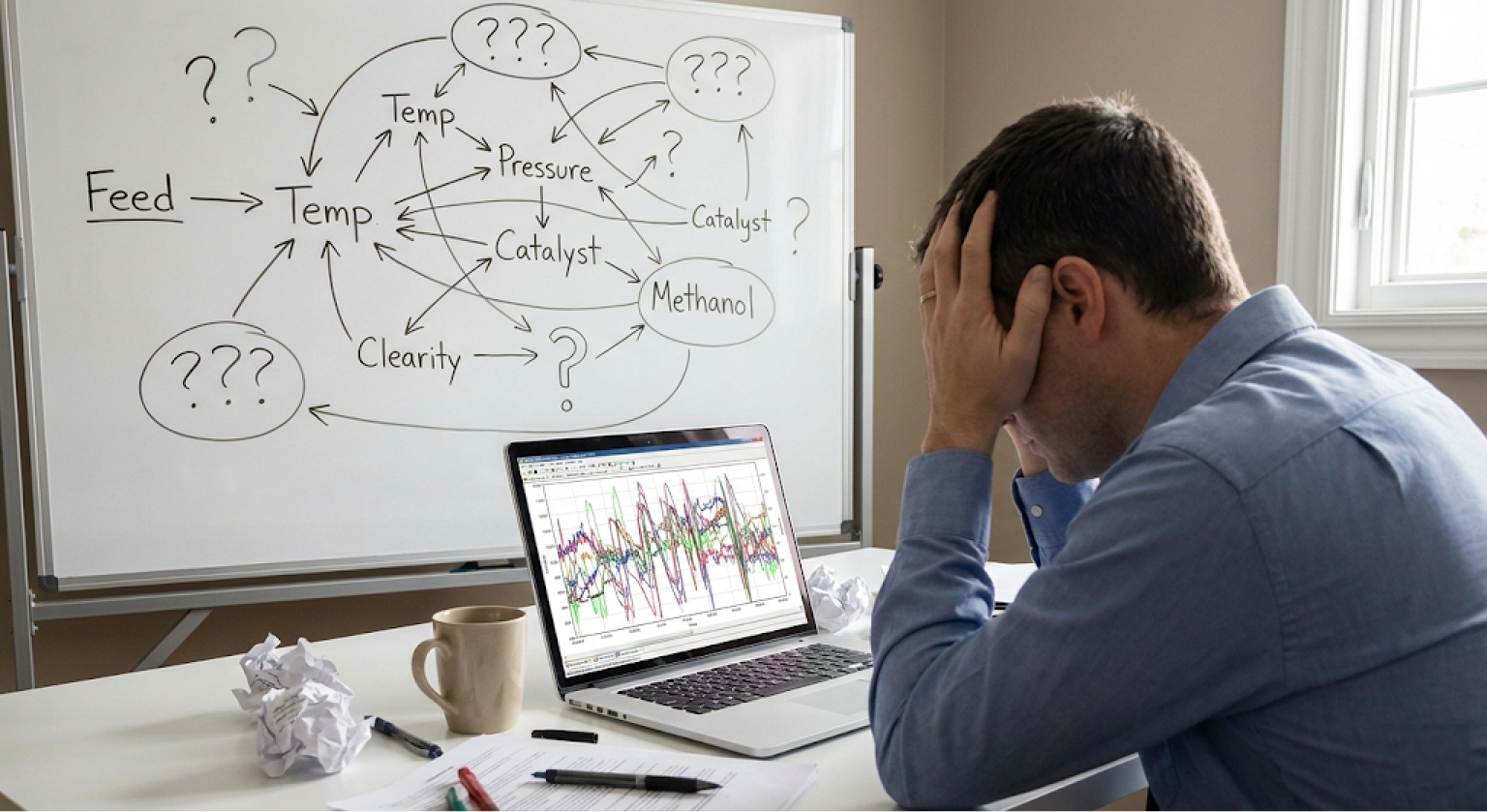
  1. Product quality variability, particularly fluctuations in key chemical properties (e.g., Methanol levels in PY), leading to off-spec risk. 
  2. Uncertainty in equipment Remaining Useful Life (RUL) due to gradual performance degradation. 
Operational constraints included: 
  • Reactive quality adjustments based on lab results 
  • Limited visibility into multivariable process interactions 
  • Manual historian data extraction 
  • No continuous degradation modelling 
  • Data fragmented across multiple process historians 
Operators frequently responded after deviations occurred, rather than predicting instability in advance. This resulted in unnecessary process disturbances, yield losses, and conservative operating practices. 

Solution

SCG TPE implemented a predictive quality and asset health framework by integrating multiple plant historians into Seeq for centralized analytics and self-service model development.
1. Historian Integration
Real-time data streams connected into Seeq included: 
  • Reactor temperatures and pressures 
  • Feed composition variables 
  • Flow rates 
  • Product quality lab measurements 
  • Equipment condition indicators 
This unified process, laboratory, and equipment datasets into a contextual analytics environment.

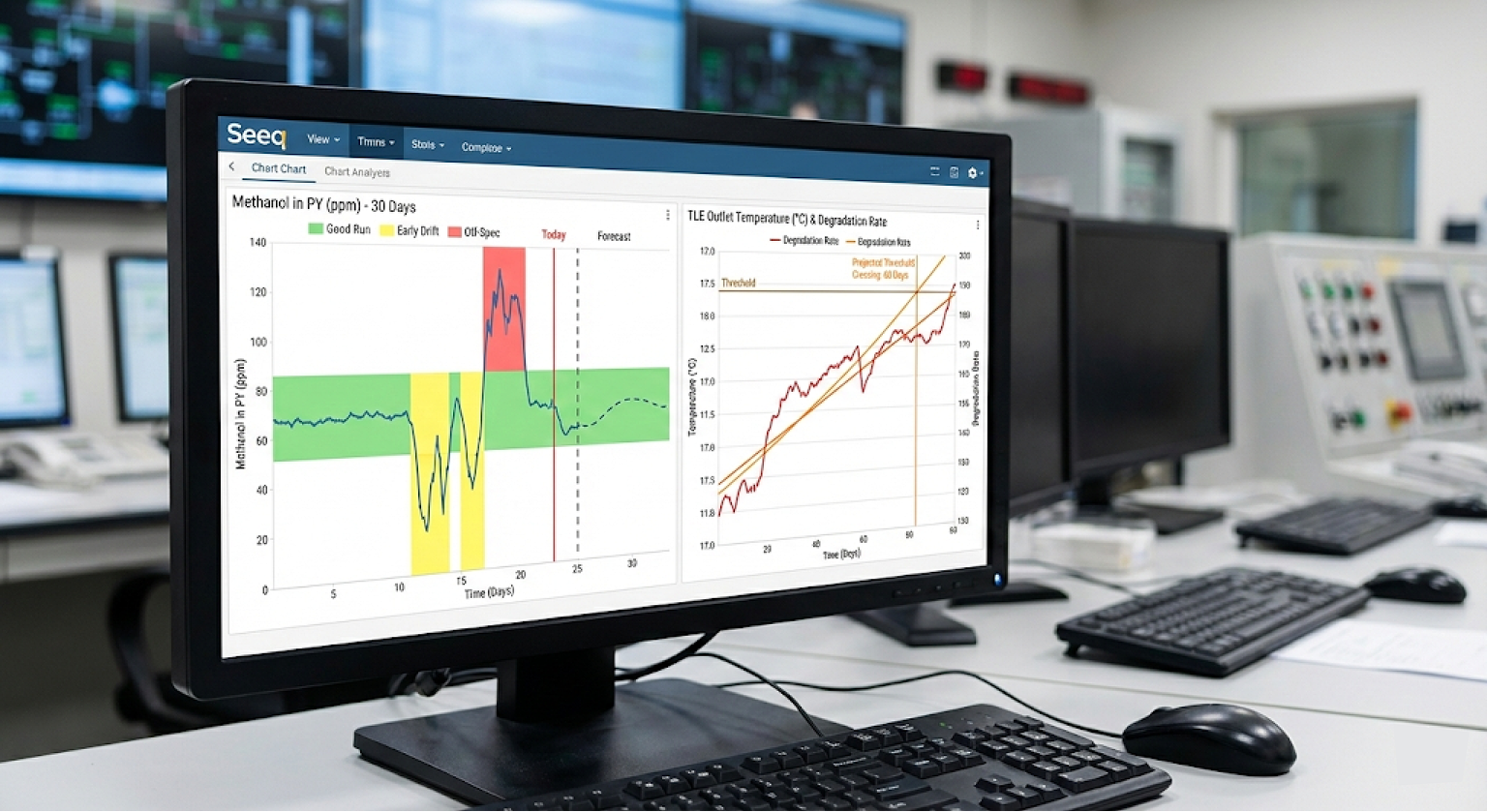
2. Self-Service Quality Analytics Using Seeq Workbench, process engineers independently built multivariable models to identify dominant quality drivers.  Capabilities included: 
  • Good-run vs bad-run classification 
  • Correlation mapping between operating variables and Methanol variability 
  • Early detection of drift patterns 
  • Statistical boundary monitoring 
Rather than reacting to lab deviations, operators gained predictive visibility into quality instability. 
3. RemainingUseful Life (RUL) Modelling Degradation trends from key equipment parameters were analysed to estimate RUL dynamically.  Engineers developed: 
  • Rate-of-change degradation indicators 
  • Threshold forecasting models 
  • Maintenance intervention timing guidance 
This enabled proactive scheduling before performance or quality was impacted.  The entire framework was built and maintained by plant engineers using self-service analytics — not external data science teams. 

Benefits

Operational Efficiency 
  • Reduced process variability 
  • Minimized reactive operating adjustments 
  • Improved stability of reactor conditions 
Product Quality & Yield 
  • Reduced off-spec production risk 
  • Improved yield consistency 
  • Stronger compliance with customer specifications 
Asset Reliability 
  • Early detection of equipment degradation 
  • Improved maintenance planning 
  • Reduced unplanned interruptions 
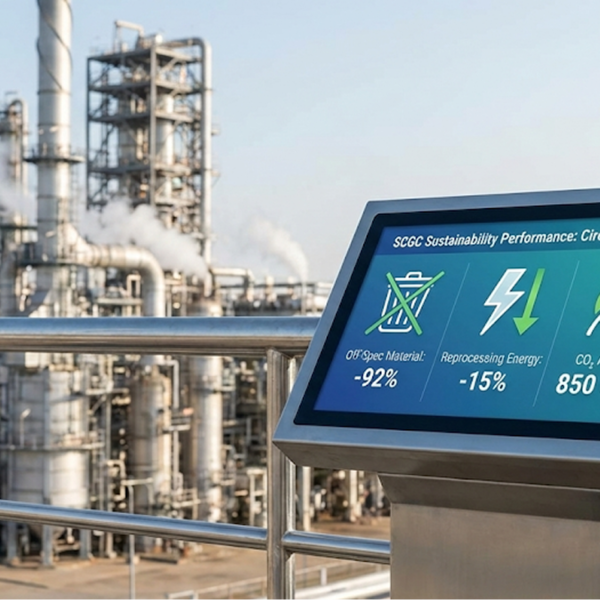
Sustainability 
  • Reduced material waste from off-spec batches 
  • Lower reprocessing and energy consumption 
Organizational Impact 
  • Eliminated manual historian data consolidation 
  • Empowered engineers with self-service predictive modelling 
  • Established repeatable quality analytics methodology 

Cost Saving

Reduced off-spec production, improved yield stability, and optimized maintenance timing generate substantial financial impact. 
For a detailed breakdown of yield improvement valuation, avoided waste modelling, and maintenance optimization savings, connect with us to review the structured cost-saving assessment framework. 

x

Contact Us

Ocean tower 2, Unit 23 floor, 75/46 Soi Sukhumvit 19 (Wattana), Sukhumvit Road, North Klongtoey, Wattana, Bangkok 10110

+66994200465 | +66 2 258 6228 

Mon – Fri: 8:30hrs – 17:30hrs