Company Background – SCG TMMS
Optimizing Reflux Ratio for Energy Efficiency & Product Quality
SCG Chemicals Public Company Limited (SCGC) is a leading integrated petrochemical producer in Southeast Asia. Within its manufacturing network, the TMMA unit operates energy-intensive distillation systems that must meet strict impurity specifications while maintaining competitive energy efficiency.
Distillation performance directly influences operating cost, product quality compliance, and plant profitability.
Challenges
The Energy Cost of Conservative Distillation
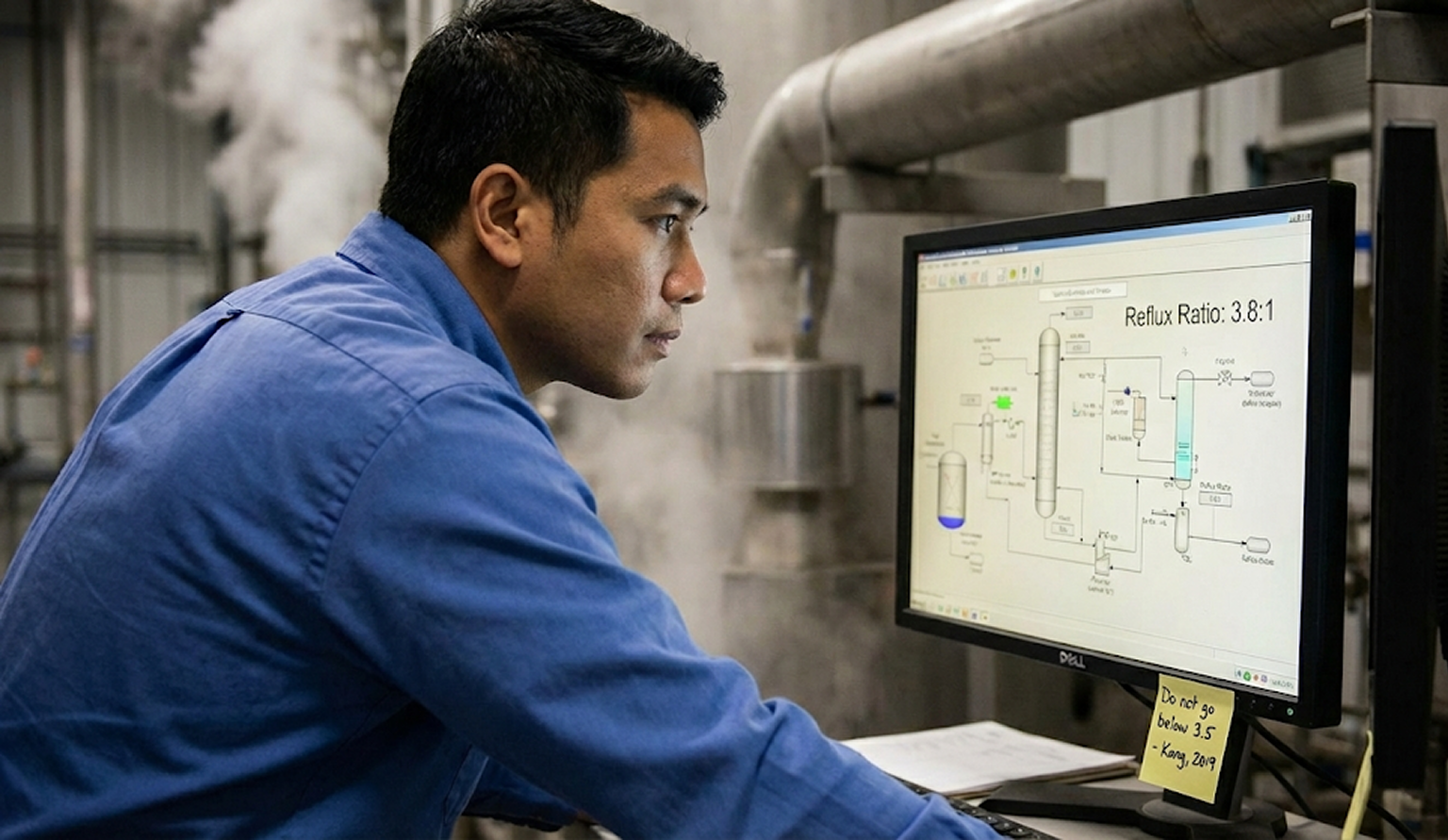
The TMMA distillation unit was required to simultaneously meet multiple strict impurity constraints (such as MiB, MCr, MA, and Water). Because critical operational data resided across disconnected process historians, engineers lacked a predictive understanding of impurity sensitivity and relied on manual spreadsheet analysis.
To avoid risking off-spec production, operations adopted highly conservative practices, maintaining excessively high reflux ratios. This lack of data visibility restricted operations from safely exploring low-reflux regimes, resulting in operational rigidity and excessive energy consumption.

The distillation column was required to meet multiple impurity constraints simultaneously (e.g., MiB, MCr, MA, Water). Operational practice was conservative:
- High reflux ratios to guarantee quality
- Limited operating experience near specification limits
- Minimal historical data in low-reflux operating regimes
- Manual review of historian data
- No predictive understanding of impurity sensitivity Data resided across multiple process historians within the plant. Engineers relied heavily on spreadsheets and static analysis, limiting their ability to confidently reduce reflux without risking off-spec production. This created excessive energy consumption and operational rigidity.
Solution
Data-Driven Reflux Optimization
SCG TMMA implemented a data-driven reflux optimization framework by integrating plant historians into Seeq for centralized and contextualized analytics.
01
Historian Connectivity
By streaming essential process data—including reflux flow, column temperatures, feed rates, impurity lab measurements, and pressure profiles—into a single real-time platform, the team completely eliminated manual data extraction. This integration provided immediate, comprehensive visibility into column behavior across all operating states.
02
Self-Service Process Analytics
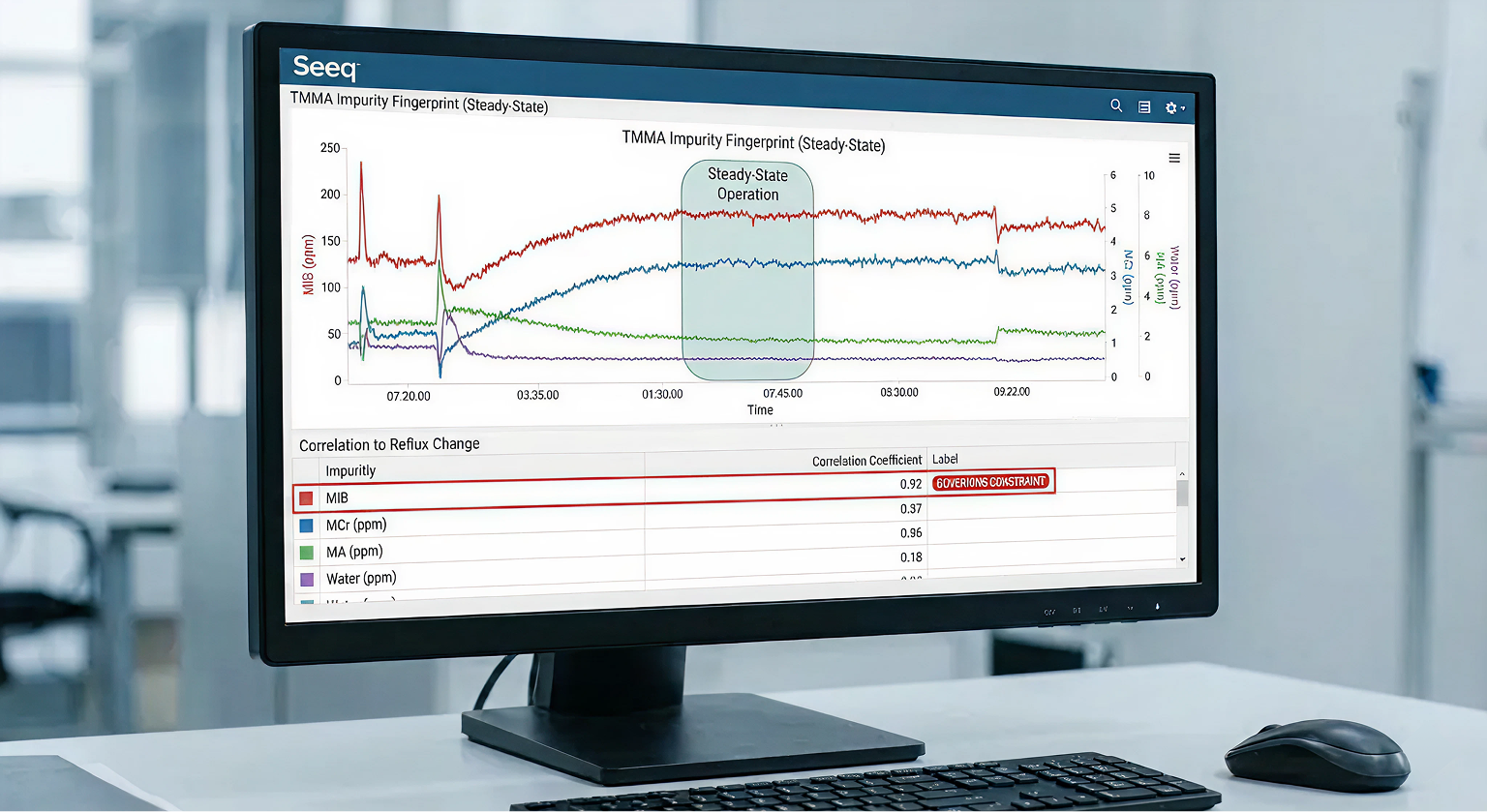
Process engineers utilized the platform to independently build multivariable correlation models, quantifying exactly how specific impurities responded to incremental reflux changes. This self-service capability allowed domain experts to replace conservative, heuristic-based limits with precise, data-backed operational envelopes.
03
Operational Decision Support
These complex analytics were translated into intuitive visual dashboards that displayed real-time reflux performance envelopes and safe operating windows. Armed with this clear identification of governing constraints, operators could confidently reduce reflux to the absolute minimum feasible level while strictly maintaining all product quality specifications.
Benefits
Maximizing Efficiency Without Compromising Quality
Operational Efficiency
- Reduced unnecessary over-refluxing
- Lower steam and energy consumption
- Improved distillation column stability
Product Quality & Compliance
- Clear identification of governing impurity constraints
- Increased confidence operating closer to specification limits
- Reduced risk of off-spec batches
Sustainability
- Lower energy intensity per ton of production
- Reduced carbon footprint from steam generation
Organizational Impact
- Eliminated spreadsheet-based analysis
- Engineers empowered with self-service advanced analytics
- Established repeatable optimization methodology applicable to other columns
Cost Saving
Avoiding Production Losses and Emergency Interventions
Energy reduction in distillation systems represents one of the largest controllable operating costs in petrochemical plants.
To review the quantified steam savings model, energy intensity reduction framework, and annualized financial impact, connect with us for a detailed cost-saving assessment specific to reflux optimization.