Optimizing Reflux Ratio for Energy Efficiency & Product Quality
Let’s Work Together
Call us directly, submit a sample or email us!
Address Business
Ocean tower 2, Unit 23 floor, 75/46 Soi Sukhumvit 19 (Wattana), Sukhumvit Road, North Klongtoey, Wattana, Bangkok 10110
Contact Us
Call : +66994200465 |
+66 2 258 6228
Email : info@techcurve.co | sales@techcurve.co
+66 2 258 6228
Email : info@techcurve.co | sales@techcurve.co
Working Time
Monday – Friday
8:30hrs – 17:30hrs
8:30hrs – 17:30hrs
Company Background
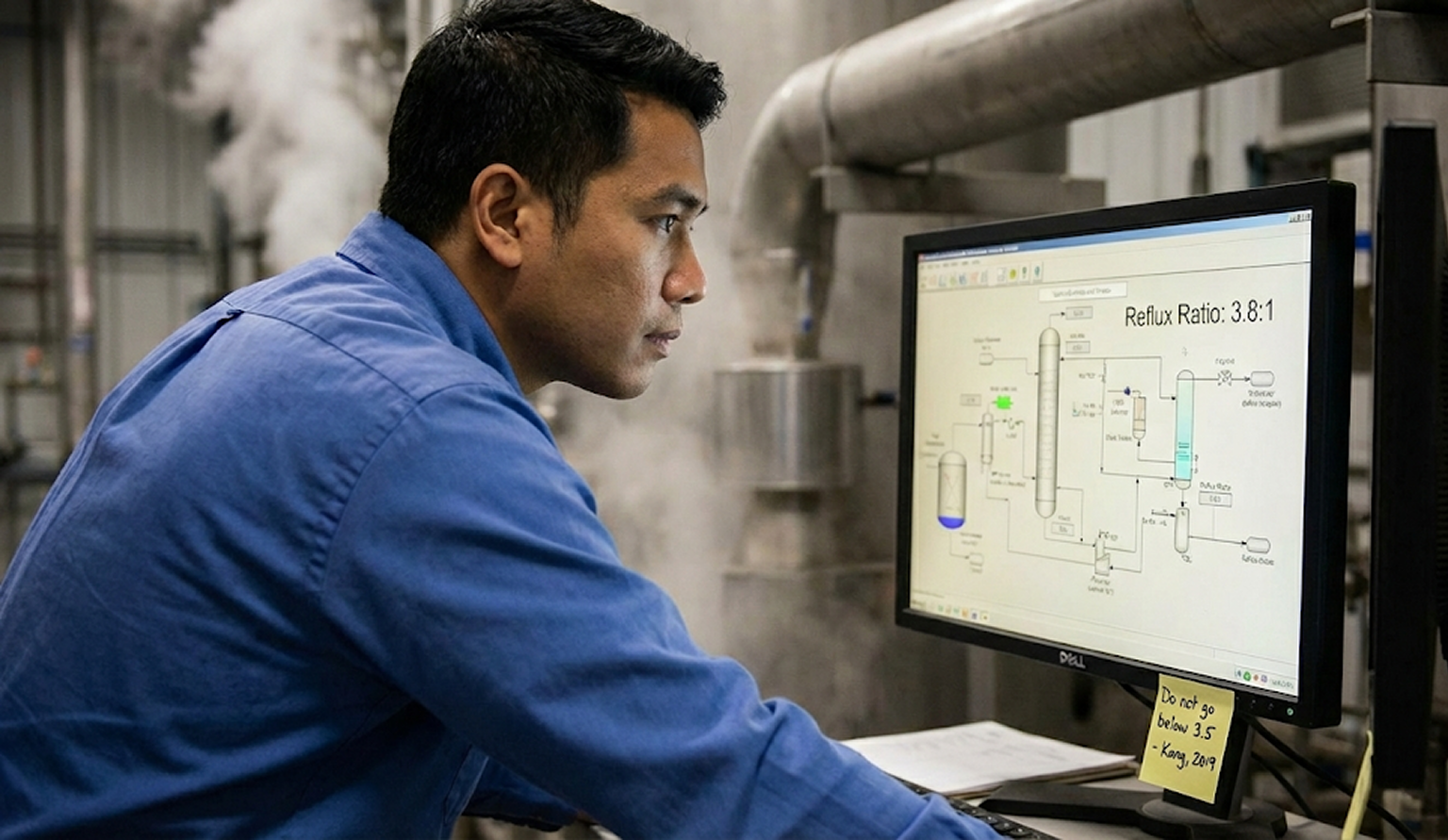
SCG Chemicals Public Company Limited (SCGC) is a leading integrated petrochemical producer in Southeast Asia. Within its manufacturing network, the TMMA unit operates energy-intensive distillation systems that must meet strict impurity specifications while maintaining competitive energy efficiency.
Distillation performance directly influences operating cost, product quality compliance, and plant profitability.
Challenges
The distillation column was required to meet multiple impurity constraints simultaneously (e.g., MiB, MCr, MA, Water). Operational practice was conservative:
- High reflux ratios to guarantee quality
- Limited operating experience near specification limits
- Minimal historical data in low-reflux operating regimes
- Manual review of historian data
- No predictive understanding of impurity sensitivity
Solution
SCG TMMA implemented a data-driven reflux optimization framework by integrating plant historians into Seeq for centralized and contextualized analytics.
1. Historian Connectivity
Process data streams including:
1. Historian Connectivity
Process data streams including:
- Reflux flow
- Column temperatures
- Feed rates
- Impurity lab measurements
- Pressure profiles
2. Self-Service Process Analytics
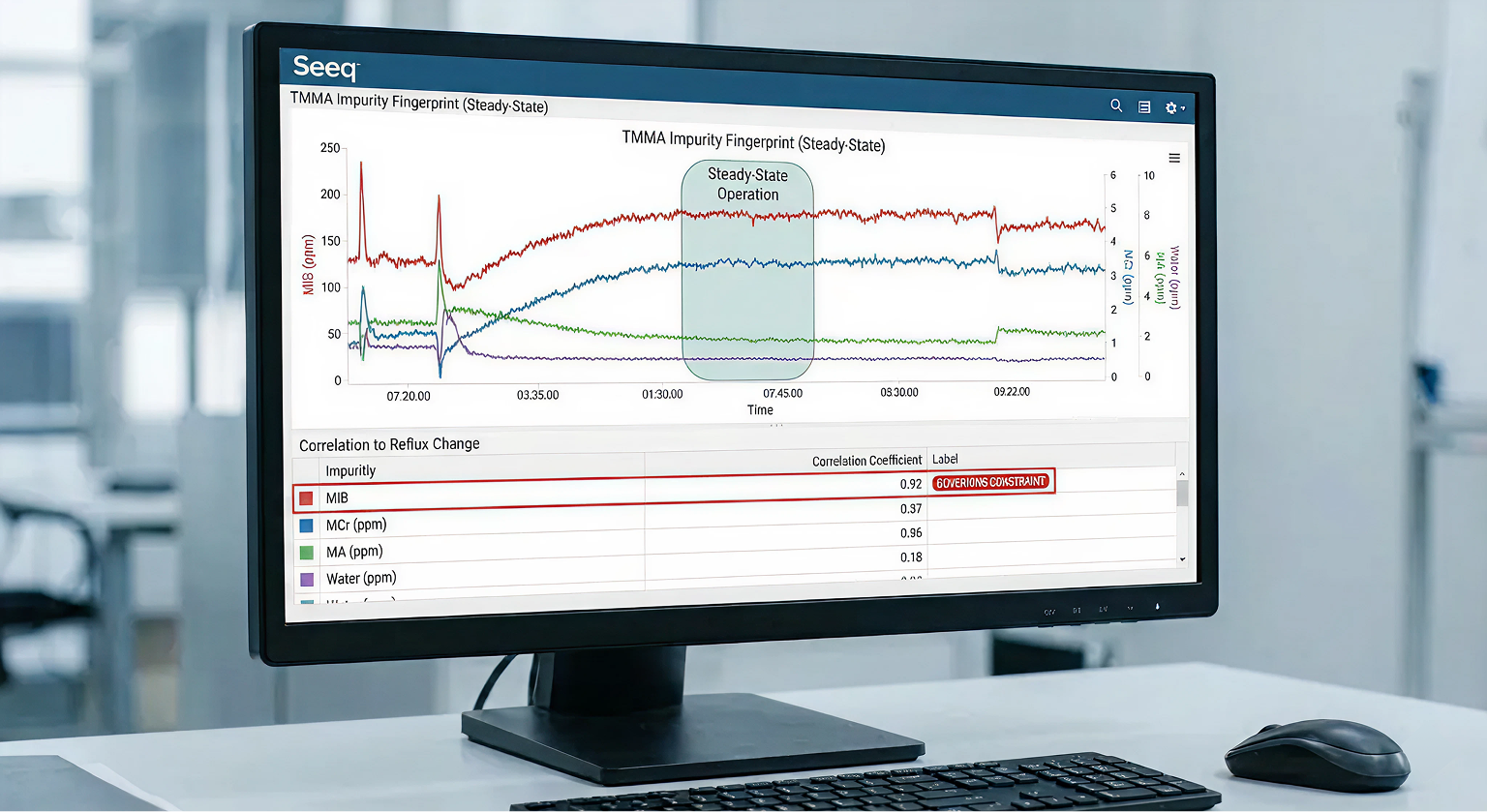
Using Seeq Workbench, process engineers independently developed impurity sensitivity models.
Capabilities included:
- Multivariable correlation analysis between reflux and impurity levels
- Identification of constraint-governing impurities
- Good-run vs bad-run operating state comparison
- Statistical filtering for steady-state operation
3. Operational Decision Support
Analytics were translated into intuitive visual dashboards showing:
- Reflux vs impurity performance envelopes
- Governing constraint identification
- Safe operating windows
Benefits
Operational Efficiency
- Reduced unnecessary over-refluxing
- Lower steam and energy consumption
- Improved distillation column stability
Product Quality & Compliance
- Clear identification of governing impurity constraints
- Increased confidence operating closer to specification limits
- Reduced risk of off-spec batches
- Lower energy intensity per ton of production
- Reduced carbon footprint from steam generation
- Eliminated spreadsheet-based analysis
- Engineers empowered with self-service advanced analytics
- Established repeatable optimization methodology applicable to other columns
Cost Saving
Energy reduction in distillation systems represents one of the largest controllable operating costs in petrochemical plants.
To review the quantified steam savings model, energy intensity reduction framework, and annualized financial impact, connect with us for a detailed cost-saving assessment specific to reflux optimization.